 Português
 Deutsch
 English
 Français
 Italiano
 Español
 Nederlands
 Svenska
Géa Makes US Open History as Only Second Lucky Loser in R16
French qualifier Arthur Géa entered as a lucky loser after Casper Ruud's withdrawal and became only the second player in Open Era history to reach the US Open Round of 16 as a lucky loser.

From Qualifying Elimination to the Last Sixteen
Arthur Géa should not have been at the 2026 US Open. The 22-year-old Frenchman lost in the final round of qualifying to Nishesh Basavareddy, packing his bags and preparing for the season to move on. Then Casper Ruud withdrew with a back injury before the main draw began, a lucky loser slot opened up, and everything changed.
On Saturday, Géa defeated American Michael Zheng in five sets to reach the Round of 16, becoming only the second lucky loser in the Open Era — stretching back to 1968 — to advance this far at the US Open. In a tournament already full of upheaval, his run stands as the most improbable story of the fortnight.
"When I found out that I was going to replace Casper, I knew there were players in that section of the draw that I could beat," Géa said after the match. He said it with the quiet confidence of someone who had backed up the statement in full.
Seven Matches in New York and Counting
By the time Géa stepped on court for his Round of 16 place, he had already played seven matches in New York — two in qualifying, then three rounds in the main draw. The five-set win over Zheng was the hardest, a test of character and endurance that stretched across the better part of an evening under the Flushing Meadows lights.
None of his opponents came easy. Géa arrived in New York ranked outside the top 80, without a Grand Slam main draw win to his name. By Saturday night, he had three, with a fourth in the Round of 16 now within his grasp. The historical significance was not lost on the commentators watching: in the entire Open Era, only once before had a lucky loser at the US Open gone this far.
The tournament has provided Géa with a stage that qualification alone could not have guaranteed him. He has used it to announce himself in terms nobody can ignore heading into the second week.
Van de Zandschulp Awaits — No Easy Path to the Quarters
Géa's reward for his historic achievement is a Round of 16 clash on Sunday against Dutch veteran Botic van de Zandschulp — himself coming off an exhausting five-set win over Belgium's Zizou Bergs that lasted nearly four and a half hours. Van de Zandschulp is no stranger to deep runs at Grand Slams and will have recovered his composure by the time they share a court at Arthur Ashe Stadium.
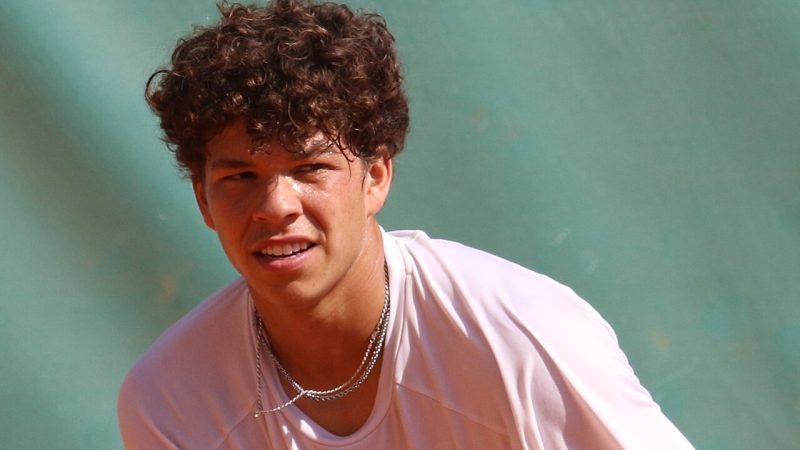 ATPMasters debutant Géa stuns Shelton for first top-10 win in Shanghai
The match-up is a compelling one. Both men have had to fight for every point to get here; neither is carrying momentum as a gift. Van de Zandschulp's hard-court game, built on consistent groundstrokes and a strong serve, suits the surface. But Géa has shown this week that he can adapt, compete and close out big moments.
The Wider Picture: A Draw Wide Open
Géa's run arrives in a US Open already stripped of its pre-tournament favourite. World number one Jannik Sinner withdrew with a knee injury in August, elevating top seed Alexander Zverev and removing the anchor of certainty from the draw. The result has been a first week full of unexpected results — high seeds falling, unseeded players thriving — and nowhere has that spirit been embodied more fully than in the story of Arthur Géa.
The main showpiece of Sunday's men's programme will be Carlos Alcaraz against Tommy Paul. But in terms of pure narrative, few matches will generate more curiosity than the lucky loser who refuses to go home.
Escolhas da redação
- 1
- 2
- 3
- 4
- 5
Moustached Alcaraz cruises past Cerundolo in Shanghai opener
Carlos Alcaraz beat Juan Manuel Cerundolo 6-3, 6-3 in his Shanghai opener, sporting a moustache born from a Tokyo bet with his team. Zizou Bergs is next.
Four days after lifting the trophy in Tokyo, Carlos Alcaraz carried his form straight into the Rolex Shanghai Masters. The second seed beat Argentina's Juan Manuel Cerundolo 6-3, 6-3 in his second-round opener on Saturday night, and he did it with a new addition to his look: a freshly grown moustache.
_(52036646944).jpg)